
Why Meridian Backyards Stay Wet: Understanding Hardpan Clay & High Water Tables
- Taylor Foad
- 2 hours ago
- 3 min read

If you live in Meridian—especially south of the freeway or in new developments near Ten Mile—you’ve likely noticed a frustrating pattern. You water your lawn, or we get a heavy spring rain, and the water just… sits there.
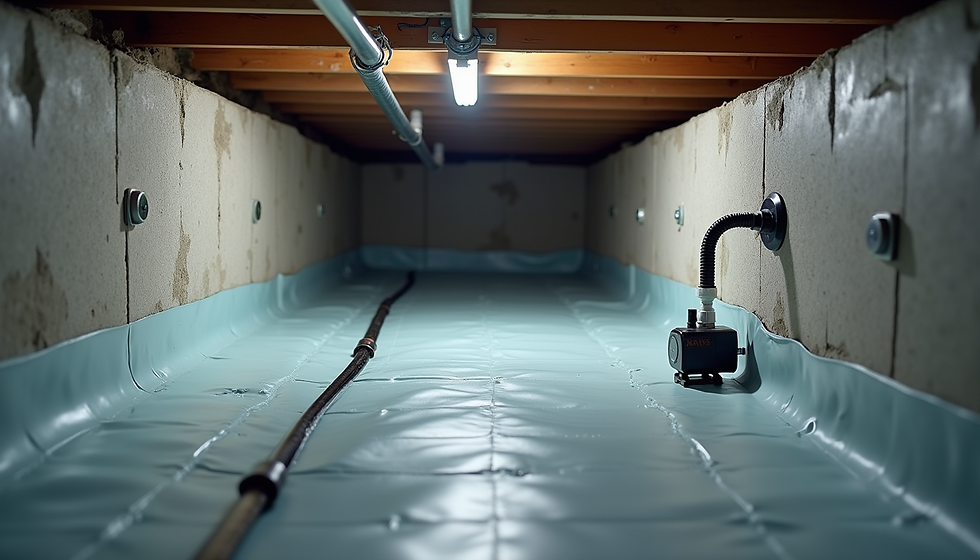
It doesn’t soak in. It creates a marsh in the low spots of your yard, and in worst-case scenarios, it creeps toward your foundation or floods your crawl space.
You aren’t over-watering, and you aren’t crazy. You are just fighting Meridian’s geology.
The Culprit: "Hardpan" Clay (Caliche)
The Treasure Valley has a unique soil composition. While areas near the Boise River are rocky and porous, much of Meridian sits on top of dense layers of silt and heavy clay.
In many neighborhoods, there is a layer of soil known as Hardpan or Caliche. This creates a subterranean barrier, almost like a concrete slab buried 12–24 inches below your grass. When rain falls or sprinklers run, the water soaks through the topsoil but hits this hard clay barrier and stops.
The "Double Whammy": Irrigation & High Water Tables
To make matters more complex, Meridian has a historically high water table, largely due to the extensive network of irrigation canals that crisscross the city (like the Ridenbaugh Canal).
During irrigation season (April through October), the groundwater levels rise significantly. If you combine:
Rising groundwater pushing up from below...
Hardpan clay blocking water from going down...
Surface water from sprinklers and rain...
You get the "Meridian Sponge Effect." The ground becomes fully saturated, and your foundation pays the price.
Why Surface Grading Isn't Enough
Many homeowners (and inexperienced landscapers) try to fix this by simply adding more dirt to "build up" the low spots. While proper grading is important, in Meridian, it’s often just a band-aid.
If you add dirt on top of a swimming pool, the water is still trapped in the pool. You haven't fixed the drainage; you've just buried the problem. To truly fix the issue, you need to penetrate that clay layer or give the water a mechanically engineered path to escape.
The Solution: French Drains Engineered for Clay
This is where a French Drain becomes the gold standard for Meridian homes.
A French drain isn't just a trench with rocks. When installed correctly in clay soil, it acts as a pressure relief valve for your yard.
We trench through the restrictive topsoil layers.
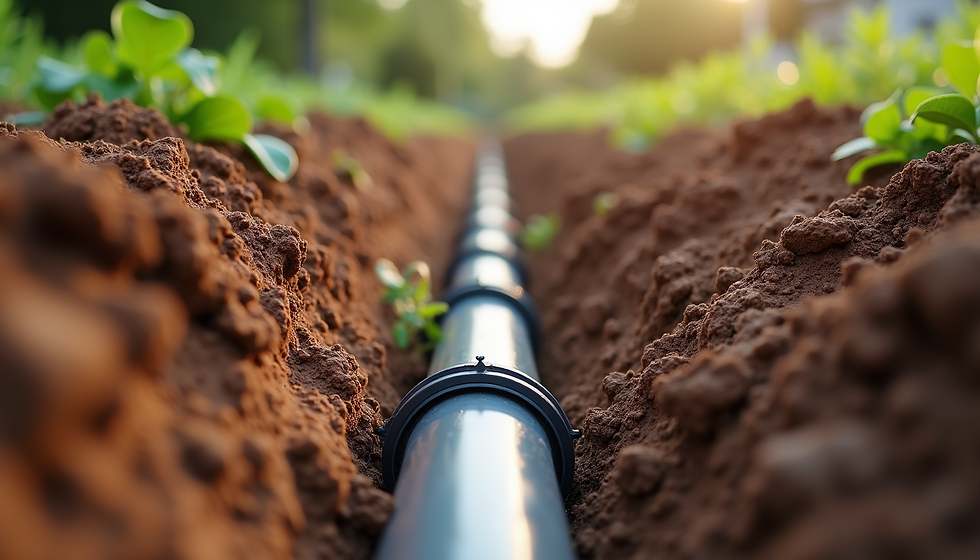
We install a perforated pipe surrounded by washed rock and specialized geotextile fabric (crucial in Idaho to prevent silt from clogging the system).
This creates a path of least resistance. Instead of sitting on the clay, water flows into the rock, enters the pipe, and is rapidly carried away from your home to a storm drain or pop-up emitter.
Summary
If you are seeing moss growing in your lawn, standing water 24 hours after a storm, or efflorescence (white powder) on your foundation walls, your soil is likely failing to drain naturally.
Don't wait for the foundation cracks to appear. In Meridian's heavy soil, water wins every time—unless you give it a place to go.
Living in Meridian and tired of the swamp? Schedule a free site assessment with Idaho Drainage Solutions. We know exactly what’s under your grass.

Comments